Search This Blog

Showing posts with label #research. Show all posts

Wednesday, 8 November 2017

Reeling in the moon: acting out actions


To further research, I asked my partner to act out the movements of reeling in the moon.
In his actions of pretending to swing out a reel, I noticed key poses similar to other drawings from other research sources of reeling out a fishing line.
From the side, there tends to be an 's' line of action, in the anticipation before swinging the fishing rod backwards. Once again, the body twists. The feet stays in the same place, only the legs and back moving and twisting; although the feet do lift, and point different ways- they do not move until the fall trying to reel in the moon. The movement of speed slows down as the moon is lassoed, this shows the weight and effort of trying to heave the moon down.


I shall use these key shapes and reference these movements with in my animation.

Monday, 6 November 2017

Fishermens movement research


Watching this footage from YouTube, I paused the video where I saw key movements of his actions of swinging the line and reeling it in. From my sketches, I have identified a pattern that continued in his movements through out the clip. Despite making different swings, he continued to form similar, repeated shapes and arm positions, which can be seen in my drawings through different parts of the clip:


notes from his movements:
-His body is never symmetrically portioned.
- when the reel is out, his spine is mostly in a 'S' shape, his chest leaning forwards and his lower end pointing backwards outwards.
-What ever position, when the reel is out- the  hands seems to be mirrored against each other.
- One hand is at the real, the other one is under.
-When the puts the fishing rod behind him, he twists to the left. The rod itself goes downwards from the left in a rotational circle when swung.  


 Redrew simplified versions of the drawings to note the line of actions. In all of his movement he tends to have an 's' shape going through him as he twists and turns. In my animation I shall exaggerate this greatly.

Fishing tutorials for refferenceing movement of fishermen


I decided to research different videos of fishermen movement with fishing rods, I drew some reference drawings of key movements.
 Although my animated person will be less detailed and realistic, This has helped me note the way a fishing rod is held, and reeled. In my animation, I will recreate this relationship with the rod, and both hands. However this was just a tutorial how to reel a rod, and is not the actual live movement, so I would like to research further.

Friday, 27 October 2017

'What makes an hero?' -Matthew Winkler, Ted-Talks


from this information compared to the film 'Frozen', I believe the character Anna ( Elsa's sister) is in fact the hero of the story. She is the one who goes on the journey, to find Elsa, meets the mentor, Kristoff, fights off the snow creatures, left to die by Hans. Try's to fight off the magic, saves Elsa. Then dies, by freezing to death. She is the  reborn, and is reward by her sisters love, and a new equilbruim.
Because of this, I need to find what role 'Elsa' plays.


Semiotics For Beginners - Daniel Chandler

http://visual-memory.co.uk/daniel/Documents/S4B/sem02.html


'Homo significans - meaning-makers. Distinctively, we make meanings through our creation and interpretation of 'signs'.'

' 'we think only in signs' (Peirce 1931-58, 2.302). Signs take the form of words, images, sounds, odours, flavours, acts or objects, but such things have no intrinsic meaning and become signs only when we invest them with meaning.'

linguist Ferdinand de Saussure and the philosopher Charles Sanders Peirce

'Saussure offered a 'dyadic' or two-part model of the sign. He defined a sign as being composed of:

a 'signifier' (signifiant) - the form which the sign takes; and
the 'signified' (signifié) - the concept it represents. '

'The Representamen: the form which the sign takes (not necessarily material);
  • An Interpretant: not an interpreter but rather the sense made of the sign;
  • An Object: to which the sign refers.'


  • '
    'Symbol/symbolic: a mode in which the signifier does not resemble the signified but which is fundamentally arbitrary or purely conventional - so that the relationship must be learnt: e.g. language in general (plus specific languages, alphabetical letters, punctuation marks, words, phrases and sentences), numbers, morse code, traffic lights, national flags;
    Icon/iconic: a mode in which the signifier is perceived as resembling or imitating the signified (recognizably looking, sounding, feeling, tasting or smelling like it) - being similar in possessing some of its qualities: e.g. a portrait, a cartoon, a scale-model, onomatopoeia, metaphors, 'realistic' sounds in 'programme music', sound effects in radio drama, a dubbed film soundtrack, imitative gestures;
    Index/indexical: a mode in which the signifier is not arbitrary but is directly connected in some way (physically or causally) to the signified - this link can be observed or inferred: e.g. 'natural signs' (smoke, thunder, footprints, echoes, non-synthetic odours and flavours), medical symptoms (pain, a rash, pulse-rate), measuring instruments (weathercock, thermometer, clock, spirit-level), 'signals' (a knock on a door, a phone ringing), pointers (a pointing 'index' finger, a directional signpost), recordings (a photograph, a film, video or television shot, an audio-recorded voice), personal 'trademarks' (handwriting, catchphrase) and indexical words ('that', 'this', 'here', 'there').'

    Semotics of Colour -

    http://www.iass-ais.org/proceedings2014/view_lesson.php?id=69


    Useful quotes:
    'Umberto Eco (1985) defines colour as a cultural unit, which means that as a sign it combines both the individual and the social.'

    'Miroslav Dachev (1997) used the cultural unit of Eco in introducing his reflections on colour in Bulgarian symbolist poetry of the late 19th and early 20th century in a monograph. Dachev introduces the concept of coloureme '

    'Kress & van Leeuwen (2002) deal with the visual colour by analyzing the colour speech and visual rhetoric, but not colour language. They achieve results within the adopted methodology of systemic linguistics'

    'colour is multifunctional in terms of Halliday (1978; 1993) with ideational, interpersonal, textual functions.'

    'Kress & van Leeuwen recognize that there are two ways to produce meaning of colours. The first is psychological – by associations that come from the culture and the past, but also from present current advertising and brands.'

    'The second way is to accept the visual qualities of colour – hue, saturation, purity, modulation, differentiation – as semantic distinguishing features. They are placed within the ideational, interpersonal and textual functions.'

    'we are faced with colour idiolects, dialects, with national and regional languages of colour. Thus, we enter by the physical properties of colour, once – in the territory of natural language, and secondly – into the social and individual culture and tastes.'

    'van Leeuwen declares that ‘looking at colour as a semiotic resource not only means looking at colour technologies, it also means looking at the way colour meanings are developed.’ (2011: 2). '

    '(Almalech 2001; 2011):
    – One and the same colour can have opposite meanings. I call this intra-colour antonymy.
    – Many colours can mean the same feeling or idea. This is the inter-colour synonymy.
    – Both effects are due to the small number of tokens in the colour language – visual and verbal'
    'Semioticians are dealing with the translation of colours. Kourdis (in print) speaks of intersemiotic translation between language and colour in advertisements. Leone (2009) presents a semiotic interpretation of the art of Marc Chagall on Moses while receiving from God the Tablets of the Law. He indicates how the visual colour matches the biblical text.'

    'Wierzbicka (1990) presents a scheme, which combines the evolutionary sequence, the prototype theory, the macro-catagories and the fuzzy sets. Her understanding is that prototypes are natural objects, rather than Rosch’s salient colour areas. Wierzbicka points to specific objects: red – blood and fire; white – light; black – darkness, night; blue – sea and sky; green – all plants; yellow – the sun at noon'


    'Borg surveys the colour categorization and colour terminology among the Negev Bedouin (1999) and the colour usage in the modern Arabic colloquials (2007). He uses the macro-colour categories to demonstrate the richness of colour expressions that stand outside the set of basic colour terms. '


    'The presence of a red veil, red and white clothes, bouquet (green) and gold in all traditional weddings through the ages – regardless of religion, the type of social order and technological level – is a universal four-syntagmatic encoding of the traditional wedding. (Almalech 1996)'

    'Physical and spiritual purity has been a universal signified of white for centuries across many cultures. With the same lexical meaning, purity, white is used at funerals – in Ancient Greece, in modern Japan, etc'


    Sunday, 22 October 2017

    Character design ideas- rough sketches

      I like the top left one, with the cape, bow and arrow.


    Taking ideas from different things I saw at the museum on Friday, I decided to create some rough basic character sketches. I took the body shape from a tea pot poster from the café with in the museum and different, a peacock, and other birds for their beaks and wings for inspiration.

    More ideas of teapot body, slightly narrowed into a female, dress shape inspired from the ones in the museum. Anther feather cape, and beak hat. The feet on this one are more like a Victorian tea pot, chunky and blocky. The hair too is inspired by leafs. And a broach holds the cape together is designed of the wing bones.

    In this unfinished concept, I decided to play with hair, in one the hair is made up of teacups. The second, similar outline but more loose to the first. In the last I have added feathers to the face and hair, with an tea cup hat.

    This is similar to the first drawing but more of a bulky,muscular body. The beak too is different, its more round and sharp, on the side of the head, the feet are webbed like ducks, the head is also round. This character would remind me of a mentor/ alley archetype.

     rough ideas for the back and face.

    Walk footage

    I decided to record movement of a man walking from two different perceptions, to help with my walk cycles to capture key frames and the way the body moves as it makes such movement. I also did it to pick up characteristics of people.

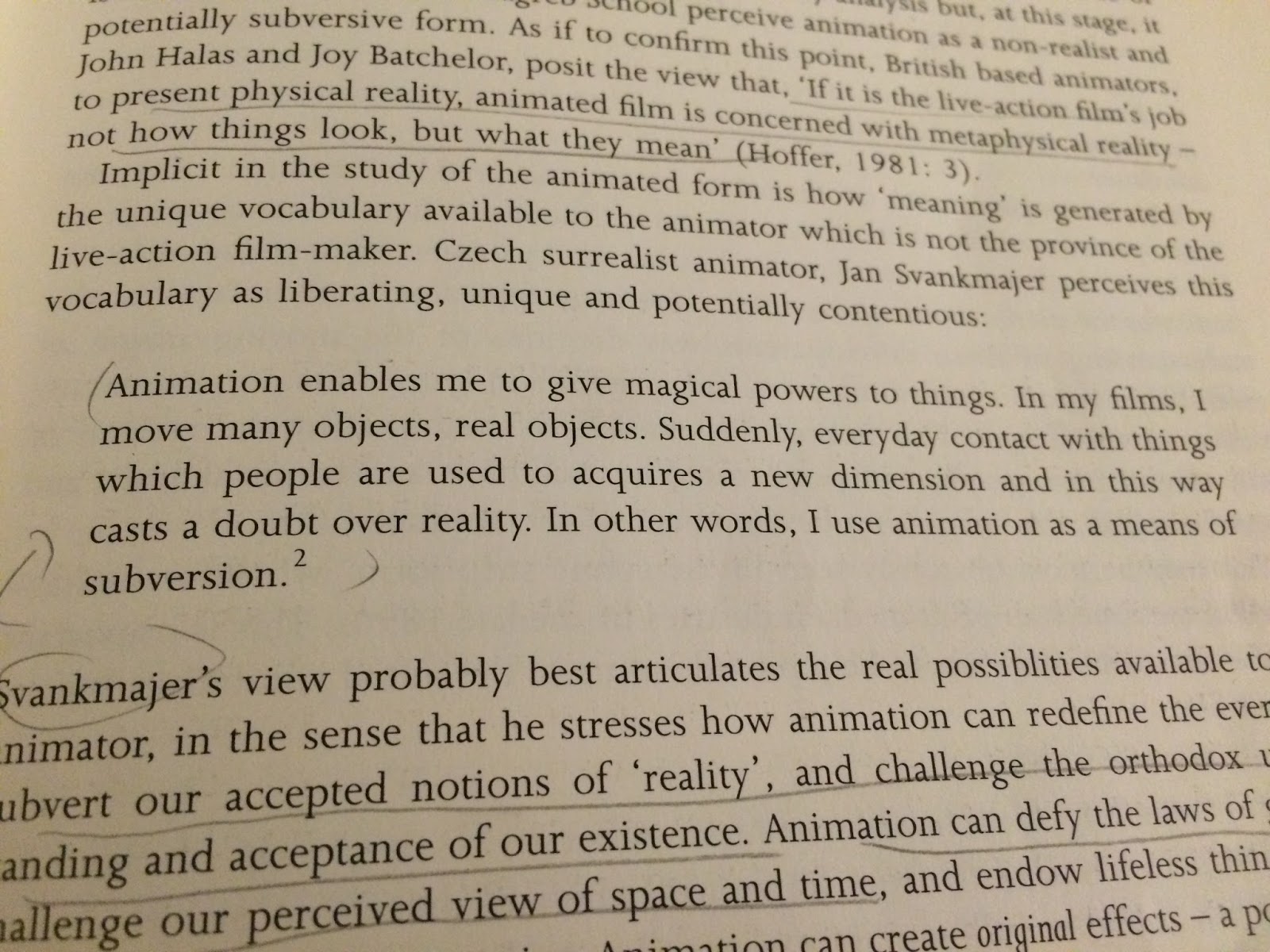
    'Understanding Animation- Paul Wells'


    This book holds many quotes of interest.
    page 24 chapter: animated films
    ''realism', it seems, is a relative thing, but the kind of film which seems to most accurately represent 'reality' is the kind of film which attempts to rid itself of obvious cinematic conventions in the prioritisaation
    of recording the people, objects, envoriments and events which chaterastise the common understanding of lived experince. pg 24

    connect to Elsa.

    'hyper-relasim', and fundamentally defines Disney, and thoses who emulate the studio's style. For Disney, and others working in this way, to connote 'realitty'
    'the chaters,objects, and envoriment with in hyper-realisit animated film are subject to the conventional physical laws of the 'real' world'. pg 25
    'the construction, movement and behsavioural tendencies of 'the body' in the hyper-realidst animsted film will correspond to the orthodox physical aspects of human beings and creatures in the 'real' world. pg 25-26

    'former Disney chief, Jeffery Katzenberg says pf Pocahontas(1995), the studio's most live-action orientated cartoon feature, that it is an exaggerated reality,
    where the real possibility of Pocahontas diving 100 feet from a cliff into a  ac
    of water may be made be more spectacular if she were to appear to dive 300 feet, a feat enacted in entire safety and with persuasive plausibility in animated form. At one time and the same time
    'the very conditions of rationality' have been challenged but made to comply to a different, yet convincing, realist rational. it may still be the case that this perceptive on realism
    will ultimate be unsatisfying.  pg 26.
    'Adams photographic=c realism as a definitive view of landscapes imagery, suggest that Disney animators believe that they do move beyond traditional modes realist representation
     in their work, and maintain a hyper-realism which is neither completely accurate version of the real world, nor a radicile vindication of the animated form.' pg27
    'Andy Darely, apropos of certain kinds of computer-generated imagery, has usefully suggested that this may be defined as second-order realism, where every object
    and envoriment through recgonisablly 'real' precise in its construction, and logical in the execution of its own laws, becomes insistently over-determined
    moving into relasim which  is simultaneously realistic but beyond the orthodoxies of realism. it maybe argued, therefore, that the mode of realism in animation could be
    understod as over-illusion.' 27
    'disneys mode of  of'squash and stretch'  animation necessarily ovre compresses and elongates charachter movement to give it an over-dedrtermained and often comic style, but remains taht moving figures within disney canon coorespond nnore directly
    to 'relastic' movement than work informed by other approaches' pg 27
    'aspires not only to natraulastic representatiomn but to engage with social reality' pg 28
    'Jan Svankmajer has called 'fantastic  documentry' (Hames 1995:112), which are works based in relaity, but which revals intriinsic truths through
    the machninations of animations in a subjective tool. reality in animation, therefore can only bea comparative and relative form, half-dedicated to representational  authencity,
    half dediciated to the narraitive forms which highten and exhbit the fluid conditions of the real world' pg 28

    Friday, 20 October 2017

    observational drawings; castle museum norwich

    Today in the castle museum, I sat and drew quick sketches of the way people stand, exhibiting the work, I also drew a group of friends chatting in a café, drawing out key characteristics.


    People standing, looking at paintings; two people sitting on a bench.
    Three elderly people sat in a café. - Focus on one man, whom was fiddling with his hands through out the conversations- threading a cloth through his hands and weaving it in-between his fingers, touching his face, playing with hair, laying his hand on the back of his neck. I presume this person would be shy. introverted, keen listener.


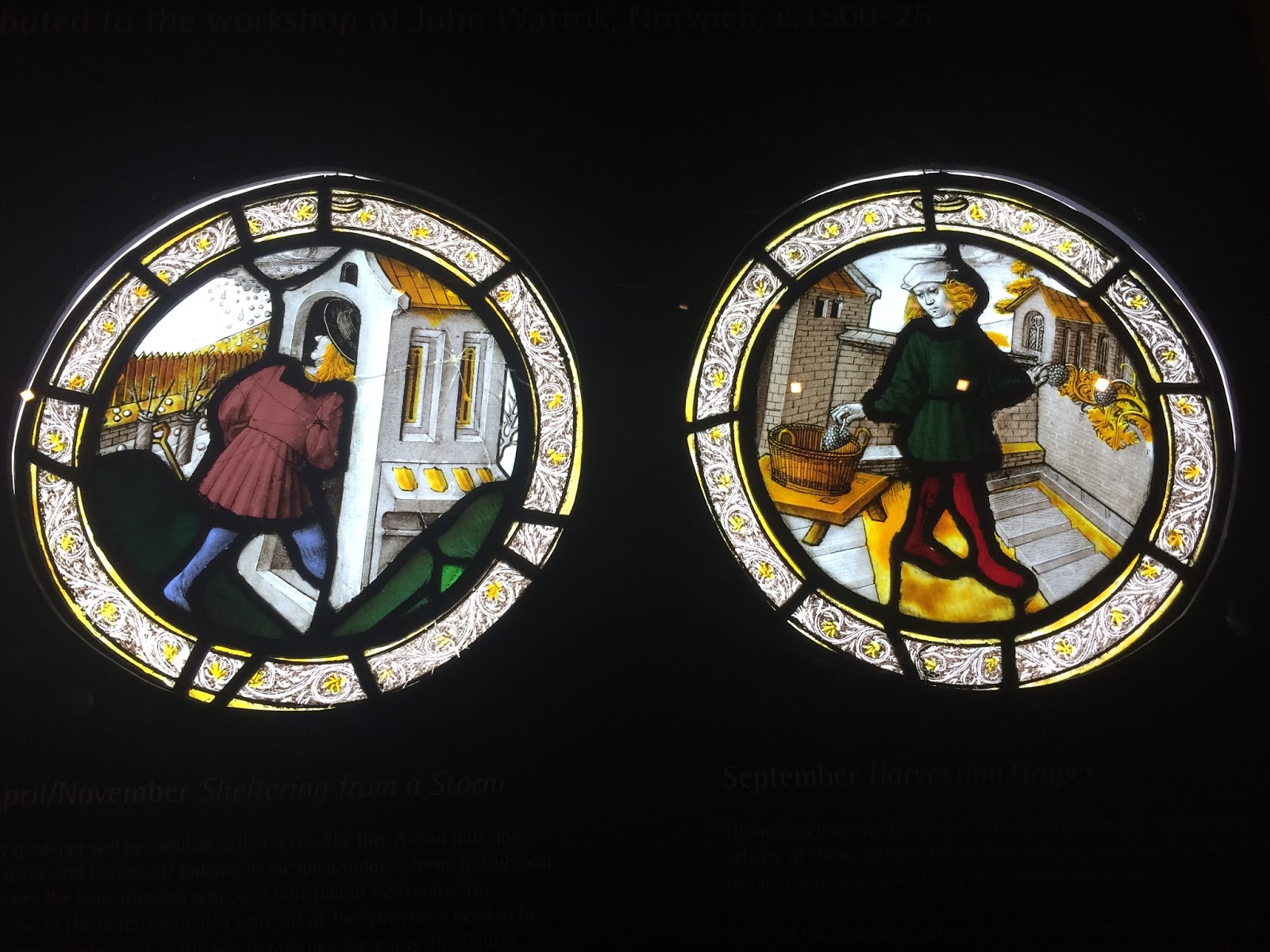
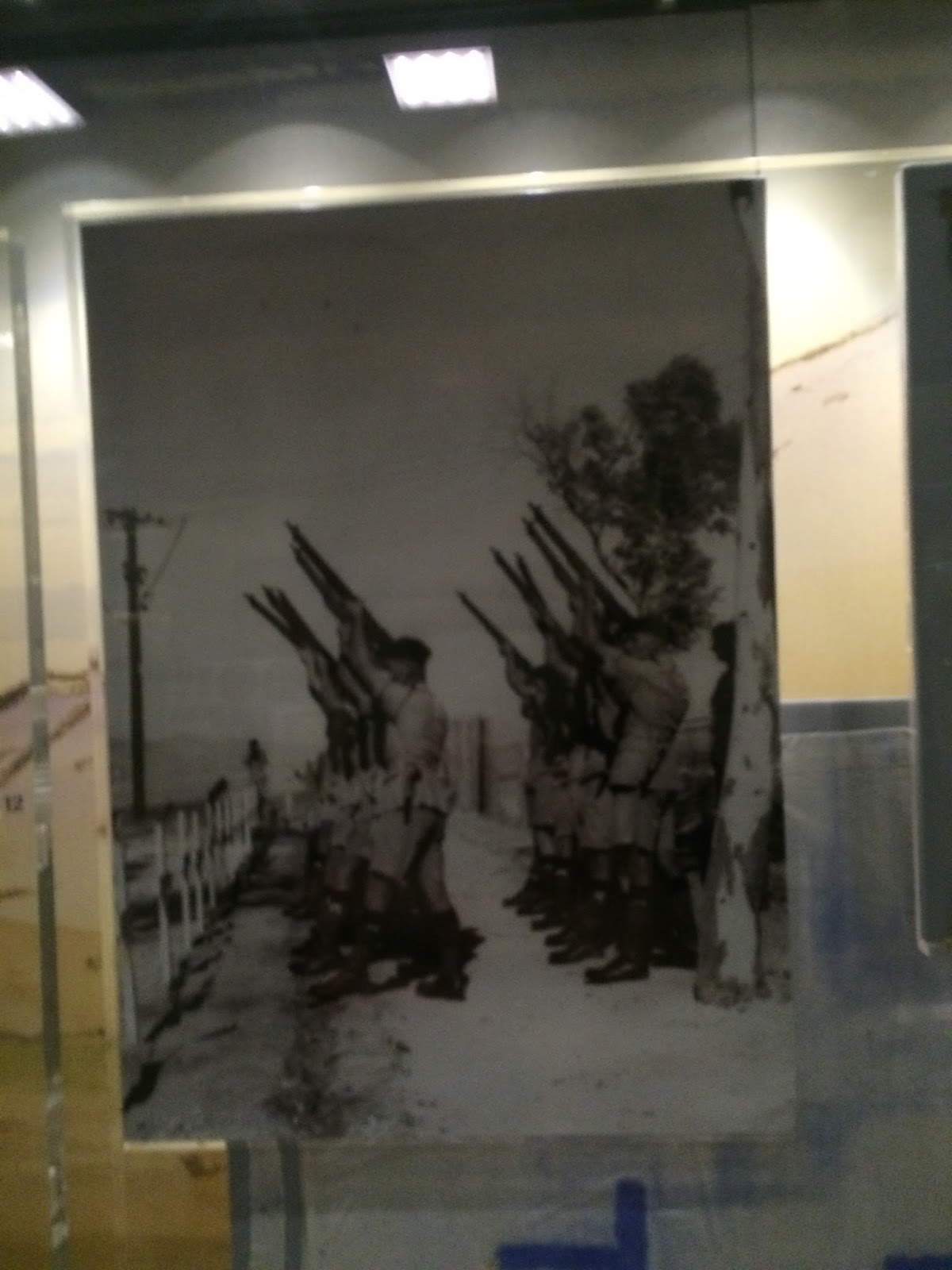
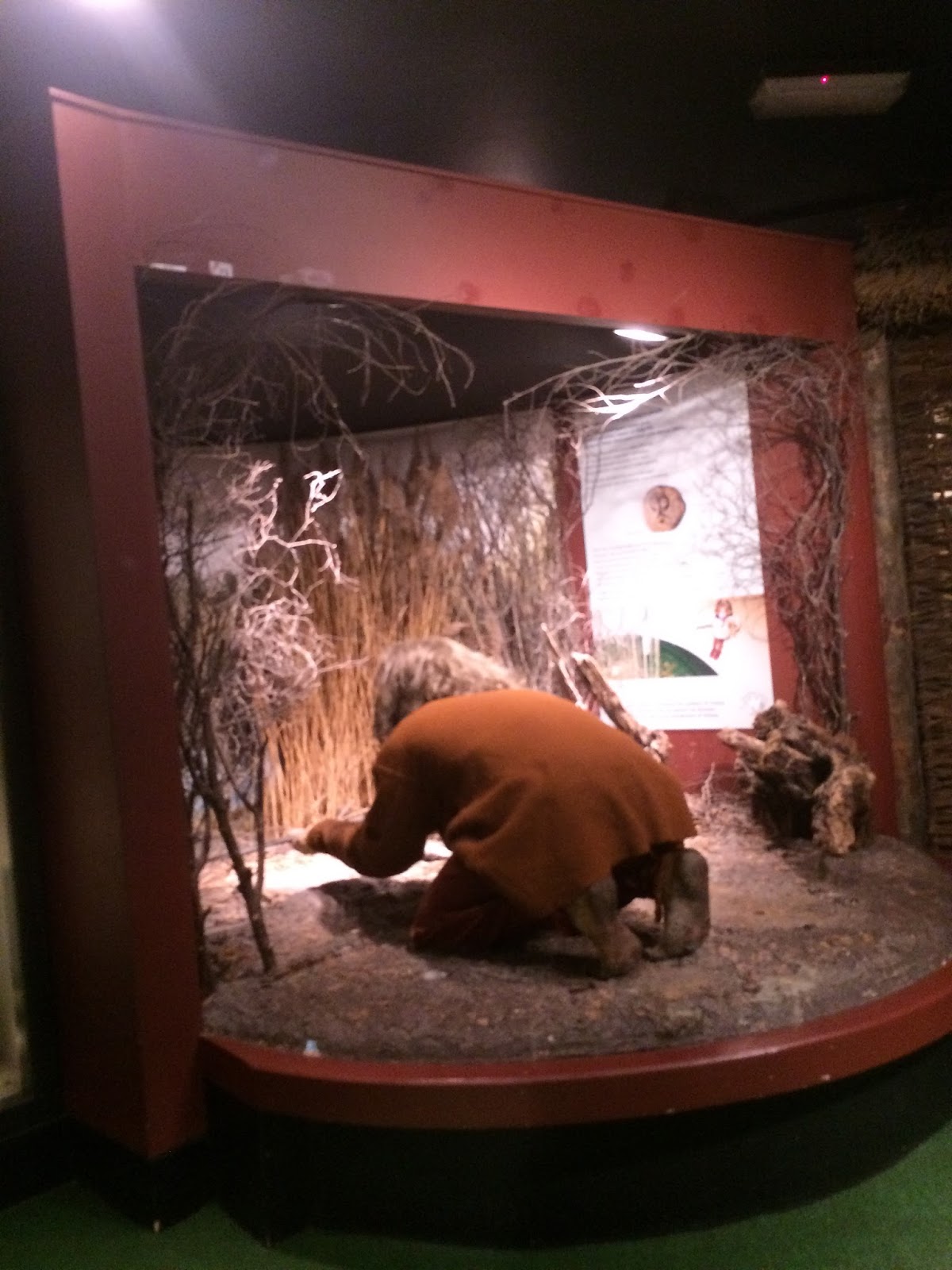
    Museum visit; Inspiration

    Today I visited the Norwich castle museum, taking photos of historical figures, historical clothing's, weapons, objects, currency, religious characters and much more for inspiration for a character.  The clothing, shapes or body poses can be very interesting to play with for visual research. I impractically like the red army suit, animal feathers, and Roman and Victorian clothing.